
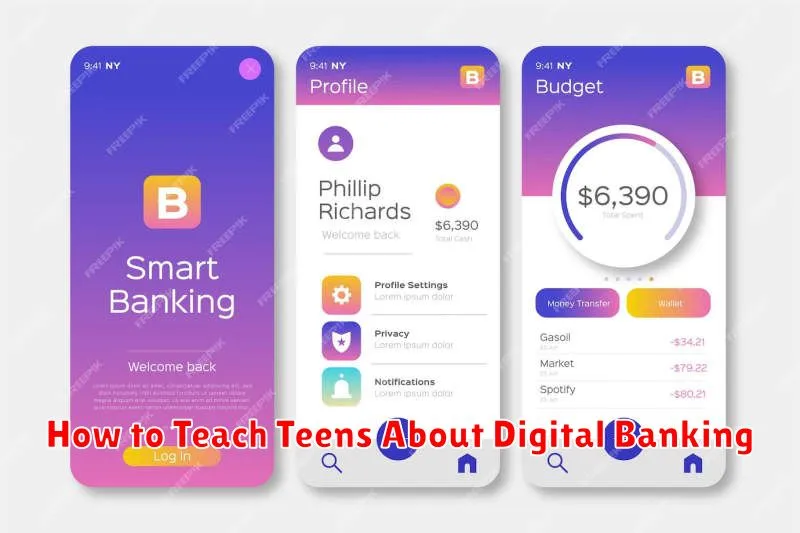
In today’s increasingly digital world, understanding digital banking is essential, especially for teenagers preparing to manage their finances. This article provides a comprehensive guide for parents and educators on how to teach teens about digital banking, covering essential topics such as online banking, mobile banking, digital payment apps, and online security. Equipping teens with this knowledge empowers them to make informed financial decisions and navigate the digital financial landscape safely and effectively.
This guide covers various aspects of digital banking for teens, including setting up online bank accounts, managing transactions through mobile banking apps, understanding the security risks associated with digital payments, and practicing safe online banking habits. By following the steps and advice outlined in this article, you can help teens develop a strong foundation in digital finance, setting them on the path towards financial responsibility and independence.
Why Financial Education Starts Early
In today’s increasingly digital world, sound financial knowledge is crucial. Early financial education equips young people with the essential skills to navigate the complexities of personal finance. It empowers them to make informed decisions about money management, saving, budgeting, and investing.
Introducing financial concepts early on helps establish responsible financial habits. Teens are beginning to interact with financial systems through digital banking, online shopping, and part-time jobs. Providing them with a solid foundation in financial literacy during these formative years allows them to develop healthy spending habits and avoid common financial pitfalls.
Early exposure to financial concepts prepares teenagers for a future where they’ll face complex financial decisions regarding higher education, career choices, and long-term financial planning. It fosters financial independence and resilience, enabling them to confidently navigate the financial landscape and secure a strong financial future.
Introducing the Concept of Digital Banking
Digital banking refers to managing your finances electronically using online and mobile platforms. Instead of visiting a physical bank branch, you can access your accounts, transfer funds, pay bills, and conduct other banking activities through a computer or smartphone.
This modern approach to banking offers convenience and accessibility, allowing you to manage your money anytime, anywhere. Security is a crucial aspect of digital banking, with various measures in place to protect your financial information. Understanding these security protocols is essential for safe and effective digital banking.
Digital banking encompasses a range of services including online banking, mobile banking, and the use of payment apps. It’s become the predominant way people interact with their finances in today’s world.
Safe Banking Habits for Teens
Developing safe banking habits early is crucial for financial well-being. Teens engaging with digital banking should prioritize strong passwords, changing them regularly. Avoid using easily guessed information like birthdays or pet names.
Regularly monitoring account activity is essential. Check for unauthorized transactions and report anything suspicious immediately. Be wary of phishing scams. Never share banking details via email or text message, even if the request appears to be from a legitimate source.
When using public Wi-Fi, exercise extra caution. Avoid accessing banking information on unsecured networks. Consider using a virtual private network (VPN) for added security. Finally, keep your banking app and device software updated. These updates often contain crucial security patches.
Setting Spending Limits

Establishing spending limits is crucial for teens learning to manage their finances in the digital world. This practice teaches responsible spending habits and prevents overdraft fees or accumulating debt.
Parents can collaborate with their teens to set realistic spending limits based on their allowance, part-time job earnings, or agreed-upon budgets. Many banks offer tools that allow parents to set limits directly on their teen’s debit card or account. Some banks also offer real-time alerts that notify parents or teens when a purchase is made or a certain spending threshold is reached. This provides valuable oversight and opportunities for discussion about spending choices.
Understanding Digital Transactions
Digital transactions are the electronic exchange of money. They occur when money is transferred between accounts or used to make purchases without physical cash. This includes activities like online shopping, paying bills electronically, and using peer-to-peer (P2P) payment apps.
Several methods facilitate digital transactions. Debit cards draw funds directly from your bank account. Credit cards offer a line of credit that you must repay later. Mobile wallets store card information digitally on your smartphone. Online banking platforms provide access to your accounts and allow you to manage transactions.
Understanding how each method works, along with its associated fees and security implications, is crucial for responsible digital banking.
Teaching Budgeting through Apps
Budgeting apps can be invaluable tools for teenagers learning to manage their finances. These apps provide a visual and interactive way to track income and expenses. They can help teens establish realistic budgets and make informed spending decisions.
Many budgeting apps offer features specifically designed for younger users, such as savings goals and allowance tracking. This makes it easier for teens to understand the relationship between earning, spending, and saving.
By using budgeting apps, teens can develop essential financial skills in a digital environment, preparing them for responsible money management in adulthood.
Explaining Interest and Fees
Interest is a crucial concept in digital banking. It represents the cost of borrowing money or the earnings on saved money. When teens deposit money into a savings account, the bank pays them interest, effectively rewarding them for saving. Conversely, when borrowing money (like with a loan), interest is what they pay the bank for the privilege of using the bank’s funds.
Fees are charges applied by banks for various services. Common fees include monthly maintenance fees, overdraft fees, and ATM fees. It’s essential for teens to understand these fees to avoid unexpected costs and manage their money effectively. Knowing which fees apply to their account and how to avoid them is key to responsible digital banking.
Security and Identity Protection
Protecting financial information is crucial in the digital age. Teens should understand the importance of strong passwords. Encourage them to create unique passwords for each account, using a combination of upper and lowercase letters, numbers, and symbols.
Teach them to be wary of phishing scams. Explain how to identify suspicious emails, texts, or websites that may try to steal their login credentials. Emphasize that they should never share their banking details with anyone online or via phone, regardless of who they claim to be.
Regularly monitoring account activity is essential. Help your teen understand how to review their transaction history for any unauthorized charges and to report them immediately to the bank.
Parental Control Features
Many banks and financial apps offer parental control features designed specifically for teen accounts. These tools empower parents to oversee their teen’s financial activities and guide them toward responsible banking habits. Familiarizing yourself with these features is a crucial step in supporting your teen’s financial learning journey.
Common parental controls include transaction monitoring, allowing parents to view their teen’s spending and deposit history. Spending limits can be set on a daily or weekly basis, helping teens learn to budget effectively. Real-time alerts notify parents of specific transactions, such as large purchases or ATM withdrawals. Some platforms also offer the ability to restrict certain types of transactions or merchants.
Building Long-Term Money Skills
Digital banking offers a unique opportunity to instill long-term money management skills in teenagers. By utilizing features like budgeting tools and spending trackers, teens can gain practical experience in managing their finances.
Regularly monitoring account balances through a banking app fosters awareness of income and expenses. This practice encourages responsible spending habits and helps prevent overdrafts. The ability to set savings goals within a digital platform makes saving more tangible and engaging, promoting financial discipline for future endeavors.
Learning to analyze spending patterns through digital banking tools provides valuable insights into financial priorities. This understanding forms the basis for creating realistic budgets and achieving long-term financial stability.
