
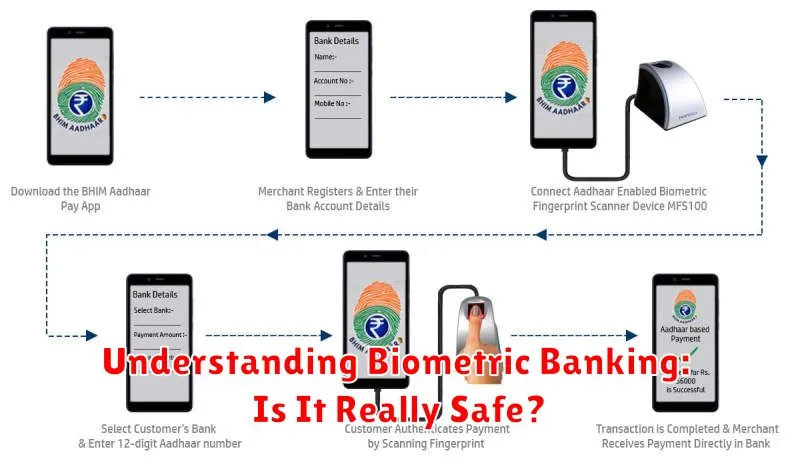
In today’s rapidly evolving digital landscape, biometric banking is emerging as a prominent trend, promising enhanced security and streamlined authentication processes. This innovative approach leverages unique biological traits, such as fingerprints, facial recognition, and voice patterns, to verify customer identities and authorize transactions. But with this increased convenience comes the crucial question: is biometric banking truly safe? This article delves into the complexities of this cutting-edge technology, examining its potential benefits and addressing the critical security concerns surrounding its implementation. Understanding the intricacies of biometric authentication in the financial sector is essential for both consumers and institutions alike.
While biometric banking offers the allure of a passwordless future, it’s imperative to carefully consider the potential risks associated with entrusting sensitive financial information to these systems. Data breaches, spoofing attacks, and the inherent vulnerabilities of biometric data storage pose significant challenges to the widespread adoption of this technology. This article will explore the various security measures employed by financial institutions to protect biometric data, analyze the potential vulnerabilities that remain, and discuss the ongoing debate regarding the balance between convenience and security in the realm of biometric banking. Ultimately, the goal is to equip readers with the knowledge necessary to make informed decisions about embracing this rapidly evolving technology.
What Is Biometric Banking?
Biometric banking uses unique biological traits to verify customer identity for financial transactions. This replaces or supplements traditional methods like passwords and PINs. Biometrics offers a potentially more secure and convenient way to access and manage financial accounts.
Instead of remembering complex codes, customers can utilize fingerprints, facial recognition, voice patterns, or even iris scans to authenticate themselves. This technology offers an added layer of security, making it difficult for fraudsters to impersonate legitimate account holders.
Types of Biometrics Used
Biometric banking leverages unique biological traits for secure authentication. Several types of biometrics are commonly used.
Fingerprint scanning is a widely adopted method, analyzing the distinct ridges and valleys of a fingerprint. Facial recognition maps facial features to verify identity. Voice recognition analyzes vocal patterns and inflections. Iris scanning examines the unique patterns in the colored part of the eye. Vein recognition maps the pattern of veins in a finger or hand.
Each biometric method offers different levels of security and convenience. The choice often depends on the specific application and the desired balance between security and user experience.
Accuracy and Reliability
Biometric authentication methods boast high accuracy rates, minimizing the risk of false positives or negatives. False positives occur when the system incorrectly identifies an unauthorized user as legitimate. False negatives occur when the system fails to recognize a legitimate user.
While biometric systems are generally reliable, their performance can be affected by various factors. These factors can include environmental conditions, user behavior, and the quality of the biometric data itself. For example, a fingerprint scanner may have difficulty reading a print if the finger is dirty or wet.
Biometric Data Privacy Concerns
One of the most significant concerns surrounding biometric banking is data privacy. Biometric data, unlike passwords, is inherently unique and immutable. If compromised, it cannot be easily changed, leaving individuals vulnerable to long-term identity theft and fraud.
Data breaches are a real threat, and the potential consequences of a biometric data breach are far-reaching. The sensitivity of this data necessitates robust security measures to protect it from unauthorized access and misuse.
Furthermore, the collection and storage of biometric data raise questions about who has access to this information and how it is being used. Clear regulations and transparent policies are essential to ensure responsible handling and safeguard individual privacy rights.
Benefits Over Traditional Logins
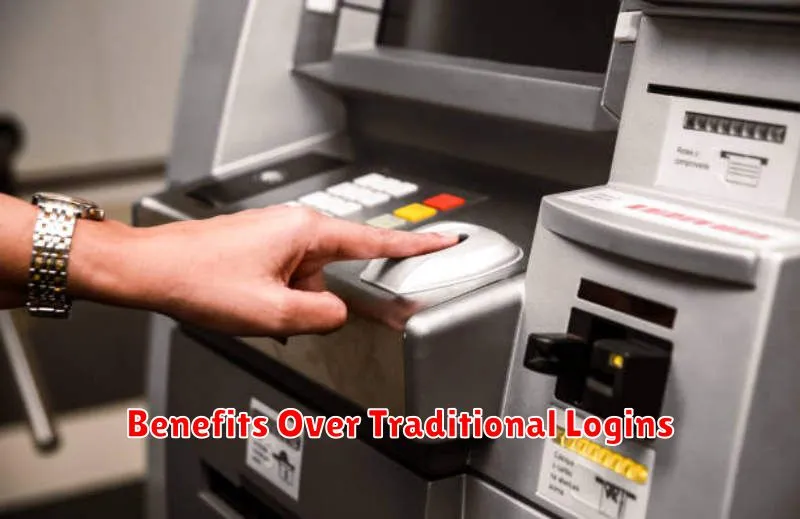
Biometric authentication offers several advantages over traditional username and password systems. Enhanced Security is a key benefit, as biometrics are unique to each individual and harder to replicate than stolen passwords. This makes unauthorized access significantly more difficult.
Improved User Experience is another advantage. Remembering complex passwords can be challenging, leading to forgotten credentials and account lockouts. Biometrics simplifies the login process, allowing for quick and seamless access.
Finally, biometrics offer Reduced Fraud potential. The difficulty in forging biometrics makes it a powerful tool against fraudulent activities, contributing to greater account security for financial institutions and customers alike.
Where Biometrics Are Commonly Used
Biometric technology has become increasingly prevalent across various sectors, enhancing security and streamlining processes. Its applications span from governmental functions to everyday consumer interactions.
Government and Law Enforcement: Biometrics play a crucial role in border control through passport scanning and immigration checks. Law enforcement agencies utilize fingerprint and facial recognition for identification and criminal investigations.
Healthcare: Biometric systems enhance patient identification accuracy, ensuring secure access to medical records and preventing medical identity theft. They also contribute to efficient timekeeping and staff management.
Workplace Access and Timekeeping: Many businesses employ biometric solutions for employee access control, replacing traditional key cards with fingerprint or facial recognition systems. This enhances security and provides accurate timekeeping data.
Consumer Electronics: Biometrics have become a staple in mobile devices, providing secure unlocking mechanisms through fingerprint and facial recognition. This adds a layer of security to personal data and simplifies device access.
Banks Leading the Innovation
Several major banks are at the forefront of implementing biometric technology. These institutions are driving innovation by incorporating features like voice recognition, fingerprint scanning, and facial recognition into their services.
Leading the charge are banks like Bank of America, Citigroup, and Wells Fargo. These institutions have been actively exploring and integrating various biometric modalities to enhance security and streamline customer experience. They see biometrics as a key tool for combating fraud and improving user authentication.
While still in relatively early stages of adoption, the momentum of biometric banking is rapidly increasing as more banks recognize the potential benefits for both security and customer convenience.
User Experiences So Far
Initial user experiences with biometric banking have been largely positive. Many users appreciate the convenience and speed of accessing their accounts using fingerprint scans or facial recognition. This eliminates the need to remember complex passwords or carry physical tokens.
However, some users have expressed concerns regarding privacy and security. There are also occasional reports of technical difficulties, such as systems failing to recognize fingerprints or faces accurately. These issues, while not widespread, highlight the importance of robust system design and ongoing improvements to the technology.
Risks and Failures to Know
While biometric banking offers convenience, it’s crucial to acknowledge potential risks. Spoofing, where fraudsters replicate biometric data, remains a concern. Systems are vulnerable to data breaches, potentially exposing sensitive information. Furthermore, system failures can lock users out of their accounts, causing significant disruption.
User error also plays a role. Damaged fingerprints or inaccurate facial recognition attempts can lead to access denial. Additionally, the irreversibility of biometric data presents a unique challenge. Compromised data cannot be easily changed like a password, increasing the potential impact of security breaches.
The Future of Biometric Security
The future of biometric security in banking, and other sectors, hinges on several key advancements. Multi-modal authentication, combining multiple biometrics like fingerprint and facial recognition, will likely become more prevalent, increasing security and reducing reliance on single points of failure.
Behavioral biometrics, which analyze patterns like typing speed and keystroke dynamics, are also poised for growth. These offer continuous authentication and can detect anomalies even if primary biometrics are compromised.
Furthermore, advancements in liveness detection and anti-spoofing technologies will be crucial in combating increasingly sophisticated fraud attempts. These advancements aim to distinguish between real biometric data and fabricated replicas.
