
In today’s increasingly digital world, managing finances has become intrinsically linked with technology. Two prominent options stand out: digital wallets and bank apps. Both offer convenient ways to handle transactions, track spending, and access financial services. This begs the question: which is truly superior for your individual needs? This article delves into a comprehensive comparison of digital wallets versus bank apps, exploring their respective features, security measures, advantages, and disadvantages to help you make an informed decision.
Choosing between a digital wallet and a bank app isn’t a simple matter of one-size-fits-all. Factors such as preferred payment methods, security concerns, and desired financial management tools play a crucial role. We’ll examine the core functionalities of both digital wallets and bank apps, highlighting their key differences and similarities, allowing you to determine which platform aligns best with your financial goals and lifestyle. Understanding the nuances of each option is essential for maximizing your financial efficiency and security in the digital age.
The Rise of Digital Payments
The proliferation of smartphones and advancements in technology have fueled the rapid growth of digital payments. Convenience, speed, and accessibility are key drivers behind this trend. Consumers are increasingly embracing contactless transactions for everyday purchases, from groceries to transportation.
This shift away from traditional cash and checks has created a competitive landscape where digital wallets and bank apps vie for dominance. Each offers distinct features and benefits, catering to evolving consumer needs and preferences. The increasing popularity of online shopping further contributes to the growth of digital payments.
What Is a Digital Wallet?
A digital wallet is a software-based system that securely stores payment information and other credentials, such as driver’s licenses, loyalty cards, or boarding passes. It allows users to make contactless transactions using a smartphone, tablet, or smartwatch at compatible point-of-sale terminals.
Digital wallets utilize various technologies, including Near Field Communication (NFC), to transmit payment data wirelessly. They often incorporate security measures like tokenization and biometric authentication to protect user information.
Bank Apps and Their Capabilities
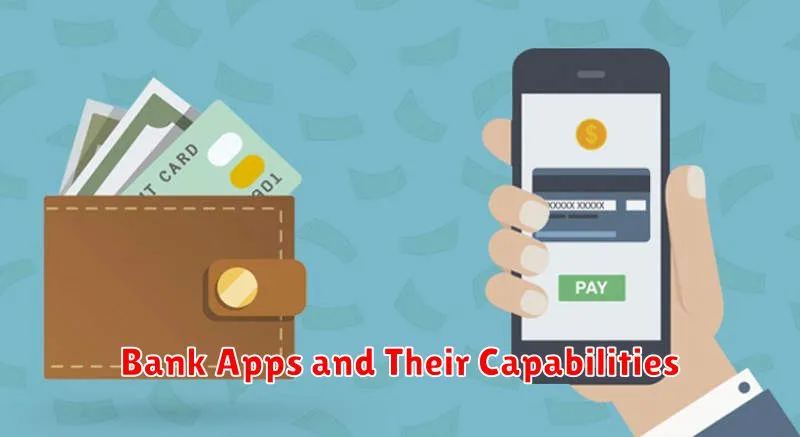
Bank apps offer a wide range of functionalities beyond simple balance checks. They serve as a digital extension of your traditional banking relationship.
Core capabilities typically include viewing account balances and transaction history. Most apps also allow funds transfers between accounts and to external recipients. Bill pay functionality is a common feature, automating recurring payments.
Many bank apps now incorporate mobile check deposit, allowing users to photograph checks for deposit. Customer service access, often via secure messaging or chat, is another standard feature. Some institutions even offer card management options, like locking a lost or stolen debit card directly through the app.
Comparing Features and Security
Both digital wallets and bank apps offer a range of features, but their focus differs. Digital wallets prioritize convenient and speedy transactions, often including features like peer-to-peer payments, loyalty program integration, and budgeting tools. Bank apps, conversely, emphasize account management, providing detailed transaction history, balance checks, bill pay, and fund transfers.
Security is paramount for both. Digital wallets often employ tokenization, replacing sensitive card data with unique tokens, and biometric authentication. Bank apps leverage multi-factor authentication and encryption to protect user data. While both strive for robust security, the specific implementations vary.
Fees and Charges Involved
Understanding the fee structures of both digital wallets and bank apps is crucial for making informed decisions. Generally, both options offer basic services like account maintenance and transfers for free. However, certain transactions may incur charges.
Digital wallets may charge fees for adding money from certain sources, such as credit cards. Some also impose fees for international transfers or withdrawing funds to a linked bank account.
Bank apps are typically associated with the fees of the underlying bank account. These may include monthly maintenance fees, overdraft charges, or fees for specific services like international money transfers or using out-of-network ATMs.
Where Can You Use Each?
Digital wallets offer broad acceptance, usable anywhere contactless payments are accepted. This includes a vast range of retailers, restaurants, and online stores. Think tap-to-pay terminals or online checkout options.
Bank apps, conversely, have more limited functionality regarding direct payments. While some banks offer integrated digital wallet features within their apps, the primary purpose remains account management. You can check balances, transfer funds, and pay bills directly through the app, but not necessarily make purchases at a physical or online point of sale without a linked debit or credit card or a supported digital wallet feature.
Integration with Other Services
A key differentiator between digital wallets and bank apps is their integration with other services. Digital wallets often boast broader integration, connecting with various merchants, online platforms, and even social media for payments and loyalty programs. This allows for streamlined transactions and a more unified user experience across different platforms.
Bank apps, while traditionally focused on core banking services, are increasingly expanding their integrations. Many now offer connections to peer-to-peer payment services, budgeting tools, and investment platforms. However, the breadth of integration typically remains narrower than that of digital wallets.
User Experience and Convenience
Both digital wallets and bank apps strive for a seamless user experience, but their approaches differ. Digital wallets prioritize speed and simplicity for transactions, often employing biometric authentication and streamlined interfaces. This makes them exceptionally convenient for point-of-sale purchases.
Bank apps, while evolving to incorporate similar features, traditionally focus on providing a comprehensive overview of financial information. This includes account balances, transaction history, and various financial management tools. While potentially offering a broader range of functionalities, this can sometimes lead to a more complex user interface.
The “better” experience depends on the user’s primary need. If speed and ease of payment are paramount, digital wallets often hold the advantage. If a holistic view of finances is preferred, bank apps generally offer more detailed information.
Choosing Based on Your Needs
Selecting between a digital wallet and a bank app depends largely on your individual financial habits and priorities. If convenience and speed for everyday transactions are paramount, a digital wallet might be the better choice. Think quick contactless payments and easy peer-to-peer transfers.
However, if you prioritize security features, detailed transaction history, and a comprehensive view of your finances, a bank app offers a more robust platform. Features like budgeting tools, investment access, and customer support give banking apps a distinct edge for overall financial management.
Consider your spending habits. Do you primarily make small, frequent purchases? A digital wallet excels in this area. Do you require a holistic view of your financial accounts for budgeting and planning? A bank app is likely more suitable.
Future of Payment Apps
The future of payment apps points towards increased integration and seamless experiences. We can expect to see more biometric authentication, such as facial recognition and fingerprint scanning, becoming the norm.
Interoperability between different payment platforms is another key area of development. This will allow users to transfer funds and make payments across different apps more easily. Furthermore, the integration of payment apps with other services, such as public transportation and loyalty programs, will create a more holistic and convenient user experience.
Blockchain technology and cryptocurrencies are likely to play a larger role in the future of payments. This could lead to faster, cheaper, and more secure transactions. The development of central bank digital currencies (CBDCs) also has the potential to reshape the payments landscape.
