
In today’s complex financial landscape, many individuals find themselves juggling multiple bank accounts. Whether it’s for separating business and personal finances, maximizing savings interest rates, or utilizing different banking services, managing multiple accounts can quickly become overwhelming without a strategic approach. This article will provide valuable tips for managing multiple bank accounts efficiently, helping you stay organized, avoid costly mistakes, and gain better control over your financial life.
Efficient management of multiple bank accounts involves more than just remembering various login credentials. It requires a system for tracking balances, transactions, fees, and interest earned across different institutions. This guide outlines effective strategies to streamline your banking processes, reduce administrative burden, and maximize the benefits of having multiple bank accounts without the added stress. From utilizing online banking tools to implementing smart budgeting techniques, these tips will empower you to take control of your finances and make the most of your diverse banking portfolio.
Why Have Multiple Accounts?
Managing finances effectively often involves utilizing multiple bank accounts. This strategy offers several key advantages.
Organization is a primary benefit. Separating funds for specific purposes, like savings, bills, or vacation funds, simplifies budgeting and tracking expenses. This clear categorization helps avoid overspending and promotes financial discipline.
Multiple accounts can also enhance financial security. Keeping a smaller balance in your primary checking account for daily transactions can limit potential losses in case of fraud or a security breach. Your larger savings can reside in a separate, higher-yield savings account.
Types of Accounts to Consider
When managing multiple bank accounts, selecting the right account types is crucial for maximizing your financial efficiency. Consider these options:
Checking Account
A checking account is essential for everyday transactions. Look for accounts with low or no monthly fees and convenient access to ATMs.
Savings Account
A savings account helps you accumulate interest on your money. Consider high-yield savings accounts to maximize your returns.
Money Market Account (MMA)
MMAs offer higher interest rates than traditional savings accounts, often requiring a higher minimum balance. They provide a balance of liquidity and growth.
Separating Personal and Business Finances
One of the most critical aspects of managing multiple bank accounts efficiently is separating personal and business finances. This practice offers several key advantages.
Firstly, it simplifies accounting. By keeping separate accounts, you create a clear delineation between your personal spending and business expenses. This makes tracking income, expenses, and profits significantly easier, especially during tax season.
Secondly, it protects your personal liability. If your business encounters legal or financial difficulties, separating your finances can help shield your personal assets from potential claims.
Finally, it presents a more professional image to clients and partners. Maintaining separate accounts demonstrates financial organization and instills confidence in your business practices.
Tracking Your Accounts Easily
Managing multiple bank accounts can feel overwhelming if you don’t have a good system for tracking them. Organization is key. Utilizing a centralized system will significantly simplify the process. This could be a spreadsheet, a budgeting app, or even a simple notebook.
Record key details for each account. This includes the bank name, account number, account type (checking, savings, etc.), and the current balance. Regularly updating these details, at least monthly, will provide a clear overview of your finances.
By diligently tracking your accounts, you can easily monitor your overall financial health and make informed decisions.
Using Apps for Organization

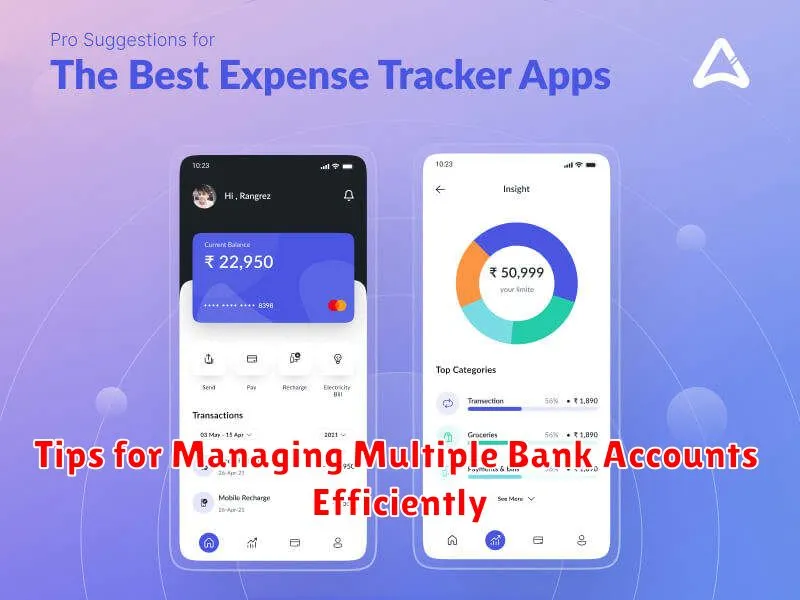
Managing multiple bank accounts can be significantly simplified with the help of financial aggregator apps. These apps provide a centralized platform to view balances and transactions across all your accounts. This eliminates the need to log in to each bank’s website or app individually, saving you valuable time and effort.
Many apps also offer budgeting tools, allowing you to track your spending and income across all connected accounts. Some even provide alerts for low balances or upcoming bills, contributing to a more proactive approach to financial management.
When selecting an app, prioritize security features such as multi-factor authentication and encryption. Ensure the app is reputable and has positive reviews regarding data privacy and security practices.
Managing Fees and Charges
One key aspect of managing multiple bank accounts efficiently is understanding and minimizing fees. Carefully review the fee schedule for each account. Common fees include monthly maintenance fees, ATM withdrawal fees, overdraft fees, and international transaction fees.
Compare these fees across your accounts. Some banks waive fees if you maintain a minimum balance or meet specific criteria like direct deposit. Consider consolidating accounts if you’re paying unnecessary fees. Tracking fees helps you identify opportunities to save and choose the most cost-effective accounts for your needs.
Automatic Transfers and Payments
Leverage automatic transfers to streamline your multi-account management. Set up recurring transfers between accounts to allocate funds for specific purposes like savings, investments, or bill payments. This eliminates manual effort and ensures consistent contributions.
Similarly, automate bill payments to avoid late fees and maintain a positive credit score. Schedule payments for recurring expenses such as rent, utilities, and loan installments. This provides peace of mind knowing your finances are handled efficiently.
Avoiding Overlaps and Confusion
Managing multiple bank accounts efficiently requires a system to avoid overlaps and confusion. Clear categorization is crucial. Designate each account for a specific purpose, such as everyday expenses, savings goals, or bill payments.
Regular reconciliation is essential. Track transactions meticulously for each account to maintain an accurate overview of your finances. This practice also helps identify and rectify any errors promptly. Consider using budgeting software or spreadsheet applications to streamline this process.
Maintaining Account Security
Security is paramount when managing multiple bank accounts. Employ strong, unique passwords for each account. Avoid easily guessed passwords like birthdays or pet names. Consider using a password manager to securely store and generate complex passwords.
Enable two-factor authentication (2FA) whenever possible. This adds an extra layer of security, requiring a second verification method, such as a code sent to your phone, in addition to your password.
Regularly monitor your account statements for any unauthorized transactions. Report any suspicious activity to your bank immediately. Be wary of phishing scams. Never share your login credentials or sensitive information via email or unverified websites.
When to Consolidate Accounts
Managing multiple bank accounts can be beneficial, but sometimes consolidation offers greater efficiency. Consider consolidating when you find yourself spending excessive time tracking transactions across various accounts. This can simplify your financial overview and reduce administrative burden.
Another key indicator is when you’re incurring unnecessary fees across multiple accounts. Consolidating can minimize or eliminate these charges, particularly monthly maintenance fees or minimum balance penalties. Evaluate the fee structures of your current accounts and compare them to the potential benefits of a consolidated account.
Finally, if you’re struggling to maintain minimum balances across multiple accounts, consolidation can be a practical solution. Pooling your funds can help you meet requirements and avoid associated penalties. Assess your overall financial goals and determine if consolidating aligns with your long-term strategy.
