
In today’s fast-paced digital world, online banking offers unparalleled convenience, allowing us to manage our finances with ease. However, this convenience comes with its own set of risks. Failing to take proper precautions can expose you to various online banking threats, including fraud, identity theft, and financial loss. This article outlines the top mistakes to avoid when using online banking, providing you with essential knowledge to protect your financial security and maintain peace of mind.
From choosing weak passwords to falling prey to phishing scams, many common errors can compromise your online banking security. Understanding these pitfalls is the first step towards safeguarding your hard-earned money. By avoiding these top online banking mistakes, you can significantly reduce your risk and enjoy the benefits of online banking with confidence. Read on to learn how to navigate the digital financial landscape safely and securely.
Online Banking: Convenience with Caution
Online banking offers unparalleled convenience, allowing you to manage finances anytime, anywhere. You can check balances, transfer funds, pay bills, and even deposit checks from the comfort of your home or on the go. This 24/7 access empowers users with greater control over their financial activities.
However, this convenience comes with the need for caution. The digital nature of online banking presents security risks. It is crucial to be aware of these potential threats and take necessary precautions to safeguard your financial information and assets. Failing to do so can expose you to fraud, identity theft, and financial loss.
Ignoring Account Notifications
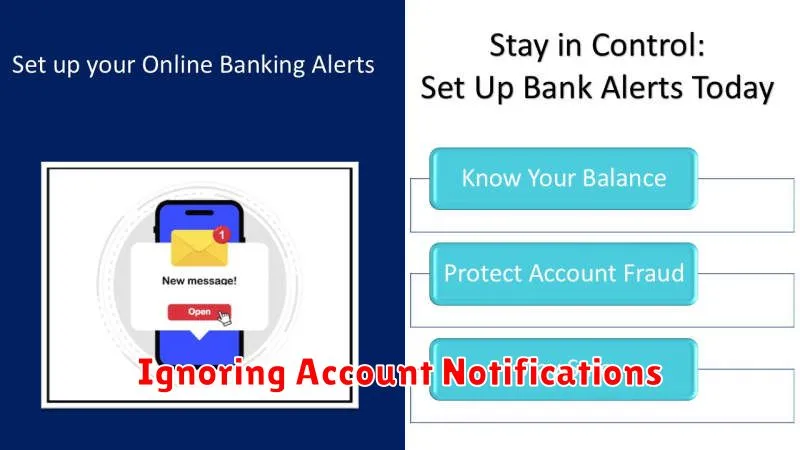
One of the most crucial mistakes you can make with online banking is ignoring account notifications. These notifications are your first line of defense against unauthorized activity and fraud. Ignoring them could leave you vulnerable to financial losses.
Banks send various notifications, including low balance alerts, deposit confirmations, and unusual activity warnings. Pay attention to each notification. These alerts often provide crucial information requiring immediate action. Make a habit of reviewing them regularly and contacting your bank promptly if anything seems amiss.
Set up convenient notification channels that you’ll actively monitor, such as email or SMS messages. Don’t dismiss notifications without reviewing their content. Taking the time to understand your account activity is essential for maintaining your financial security.
Using Public Wi-Fi for Transactions
Public Wi-Fi hotspots are convenient, but they’re often unsecured. This means your data, including online banking credentials, could be intercepted by cybercriminals. Avoid accessing your financial accounts or conducting any transactions while connected to public Wi-Fi.
If you absolutely must use public Wi-Fi, take extra precautions. Use a virtual private network (VPN) to encrypt your connection. A VPN creates a secure tunnel for your data, making it much harder for hackers to intercept. Double-check the network name to ensure you’re connecting to the legitimate hotspot and not a malicious imposter. And always log out completely of your banking session when finished.
Weak Password Habits
Using weak passwords is a significant security risk. Many individuals employ easily guessable passwords, such as “123456” or “password,” making their accounts vulnerable to unauthorized access. Others reuse the same password across multiple platforms, so a breach on one site compromises all others using that same password.
Strong passwords are crucial. They should be lengthy, complex, and unique. Incorporate a mix of uppercase and lowercase letters, numbers, and symbols. Consider using a reputable password manager to generate and securely store strong, unique passwords for each of your online accounts.
Not Logging Out on Shared Devices
Failing to log out of your online banking account on a shared computer or device is a critical security risk. Public computers, such as those in libraries or internet cafes, and even devices shared among family members, can retain your login information. This can allow unauthorized individuals to access your account and potentially compromise your financial information.
Always make sure to click the “Log Out” or “Sign Out” button when finished with your online banking session. Do not simply close the browser window, as this may not terminate your session. This practice is essential for safeguarding your finances and preventing unauthorized access.
Neglecting Software Updates
Failing to update your operating system, browser, and antivirus software leaves you vulnerable. Outdated software often contains security flaws that hackers can exploit to gain access to your device and potentially your online banking credentials.
These updates frequently include critical security patches that address known vulnerabilities. By postponing or ignoring these updates, you’re essentially leaving the door open for cybercriminals.
Enable automatic updates whenever possible. This ensures you have the latest protection without having to remember to manually install updates.
Overlooking Fraudulent Emails
One of the most significant risks in online banking is falling victim to phishing scams. Criminals often send deceptive emails that appear to be from your bank. These emails may ask you to verify your account details, update your password, or click on a link to resolve a supposed issue.
Never respond to these emails or click on any included links. Legitimate banks will never request sensitive information via email. If you are concerned about the legitimacy of an email, contact your bank directly through official channels.
Disabling Two-Factor Authentication
Two-factor authentication (2FA) is a crucial security measure that adds an extra layer of protection to your online banking account. It requires a second form of verification, such as a code sent to your phone or email, in addition to your password. Disabling 2FA significantly weakens your account security and makes you a prime target for cybercriminals.
Even if it seems inconvenient, maintaining 2FA is vital. The slight delay is a small price to pay for the significant security benefits it provides against unauthorized access.
Falling for Fake Support Calls
Phishing attacks frequently target online banking users. Scammers may pose as bank representatives, contacting you via phone, claiming a problem with your account or a suspicious transaction.
They’ll often pressure you to provide sensitive information like your login credentials, account numbers, or social security number. Never divulge this information over the phone. Legitimate bank representatives will never ask for your full password or other sensitive details through an unsolicited call.
If you receive a suspicious call, hang up immediately and contact your bank directly using the official customer service number found on their website or the back of your debit/credit card.
How to Stay Protected
Staying safe while using online banking requires vigilance and proactive measures. Regularly monitor your account statements for any unauthorized transactions. Report suspicious activity to your bank immediately.
Create strong and unique passwords. Avoid using easily guessable information like birthdays or pet names. Consider using a password manager to generate and store secure passwords.
Be cautious of phishing scams. Banks will never ask for your login credentials via email or text. Verify the legitimacy of any communication purportedly from your bank by contacting them directly through official channels.
Ensure your devices have up-to-date antivirus and anti-malware software installed. These programs help protect against malicious software that can compromise your online banking security.
Log out completely after each online banking session. Avoid using public Wi-Fi for online banking as it can be insecure.
