
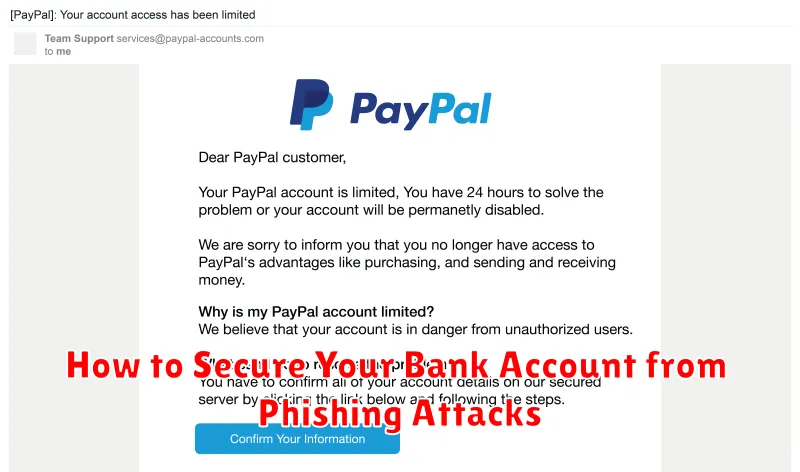
In today’s digital age, phishing attacks pose a significant threat to the security of your bank account. These deceptive tactics, often employing fraudulent emails and fake websites, aim to trick you into revealing sensitive information such as your username, password, and account number. Falling victim to a phishing scam can lead to identity theft, financial loss, and significant damage to your credit score. It’s crucial to understand how these attacks work and take proactive steps to protect your bank account and personal information from these cybercriminals.
This article provides a comprehensive guide on how to secure your bank account from phishing attacks. We will explore common phishing techniques, teach you how to identify suspicious emails and websites, and outline the essential steps you can take to strengthen your online security. By implementing these security measures and staying informed about the latest phishing threats, you can significantly reduce your risk of becoming a victim and keep your bank account and financial future safe.
Understanding Phishing Attacks
Phishing attacks are a significant threat to online security, designed to steal your sensitive information. These attacks typically involve deceptive emails, messages, or websites that appear legitimate, often mimicking trusted institutions like banks.
The goal is to trick you into revealing your usernames, passwords, credit card details, and other personal data. Attackers employ various tactics, creating a sense of urgency or offering enticing rewards to pressure victims into acting quickly without thinking critically.
Recognizing these attacks is the first step towards protecting yourself. Look for suspicious email addresses, grammatical errors, and requests for personal information that legitimate organizations would never ask for online. Staying vigilant and informed is crucial in the fight against phishing.
Common Phishing Techniques
Phishing attacks employ various deceptive tactics to steal sensitive information. Understanding these methods is crucial for protecting your bank account.
Deceptive Emails and Text Messages
Phishers often send emails or text messages disguised as legitimate communications from your bank. These messages may urge you to update your account information, verify a transaction, or claim suspicious activity.
Fake Websites
Spoofed websites mimic legitimate banking portals. These sites often have similar URLs and designs, tricking users into entering their credentials.
Phone Calls
Vishing (voice phishing) involves fraudulent phone calls where scammers impersonate bank officials to extract personal information.
Spotting a Phishing Email
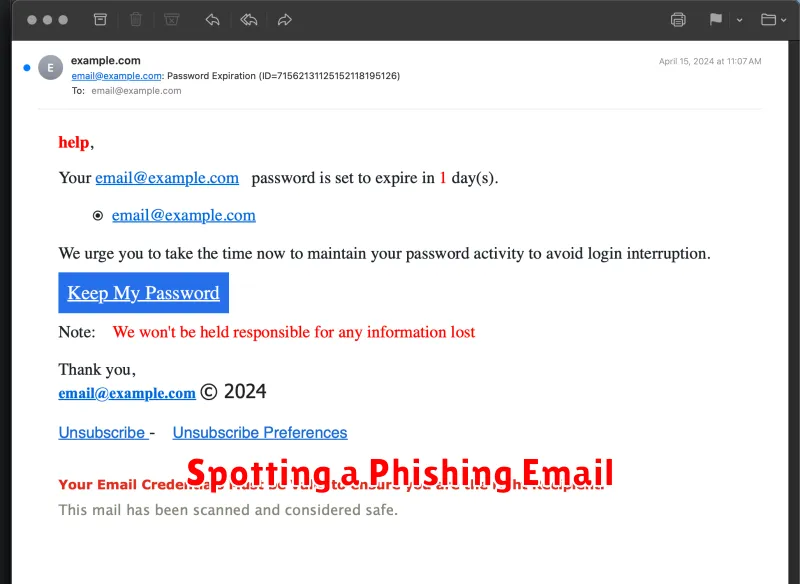
Phishing emails often masquerade as legitimate communications from reputable organizations. Recognizing these deceptive messages is crucial for protecting your bank account. Look for telltale signs that suggest an email might be a phishing attempt.
Check the sender’s email address carefully. Does it truly belong to the organization it claims to represent? Phishers often use addresses that are slightly altered or contain misspellings. Hover over any links before clicking them to see the actual URL. If the destination doesn’t match what’s displayed, it’s likely a phishing link.
Be wary of urgent or threatening language. Phishing emails often pressure you to act quickly without thinking. They might claim your account is compromised or that you need to update your information immediately. Legitimate organizations rarely employ these tactics.
Finally, examine the overall quality of the email. Look for grammatical errors, awkward phrasing, and unprofessional design. These can be strong indicators of a phishing attempt.
Avoiding Fake Banking Websites
Phishing attacks often involve fake banking websites designed to steal your credentials. Being able to identify these fraudulent sites is crucial for protecting your account.
Carefully examine the website address. Look for misspellings or slight variations from your bank’s legitimate URL. Fake websites may use a similar domain name but with a different extension.
Check for a secure connection. Legitimate banking websites use HTTPS, indicated by a padlock icon in the address bar. The absence of this icon or a warning about the site’s security certificate should raise a red flag.
Be wary of websites that ask for excessive information. Banks typically do not request sensitive data like your full social security number or account PIN through their website.
Security Tips for Phone Calls
Never give out sensitive information like your bank account number, social security number, or passwords over the phone, especially if you didn’t initiate the call. Legitimate organizations will never ask for this information over an unsolicited phone call.
If you receive a suspicious call asking for personal information, hang up immediately. Independently verify the caller’s identity by looking up the organization’s official contact information and calling them back directly.
Be wary of caller ID spoofing. Scammers can manipulate caller ID to make it appear as if they are calling from a trusted source. Don’t rely solely on caller ID to verify a caller’s identity.
Reporting Phishing Attempts
Reporting phishing attempts is crucial in the fight against online fraud. By reporting these scams, you help protect yourself and others from becoming victims.
If you suspect you’ve encountered a phishing attempt targeting your bank account, contact your bank immediately. Report the details of the incident, including any emails, text messages, or websites involved.
You should also report the phishing attempt to the appropriate authorities. In the United States, you can file a report with the Federal Trade Commission (FTC).
Using Two-Factor Authentication
Two-factor authentication (2FA) adds an extra layer of security to your bank account by requiring two different forms of identification to access it. This makes it significantly harder for phishers to gain unauthorized access, even if they manage to obtain your password.
Typically, 2FA involves something you know (your password) and something you have (like a code from your phone). Common methods include receiving a code via text message, using an authenticator app, or through a security token. Enabling 2FA is often a straightforward process within your bank’s online settings.
By using 2FA, you significantly reduce the risk of unauthorized access from phishing attacks. Even if a phisher tricks you into revealing your password, they still need that second factor to gain entry to your account. This extra hurdle often deters them completely.
Educating Family Members
Phishing attacks don’t just target individuals; they often target families. Educating your family members about phishing is crucial for overall account security.
Explain what phishing is, emphasizing the danger of clicking suspicious links and sharing personal information online. Show them examples of phishing emails and text messages. Stress the importance of verifying the sender’s identity before interacting with any communication purportedly from a bank or financial institution. Encourage them to contact you or the bank directly if they are unsure about the legitimacy of any message.
Tools to Help Identify Scams
Several tools can assist in identifying potential phishing scams. Anti-phishing software integrates with your web browser and email client, analyzing websites and messages for suspicious characteristics. These tools compare sites against known phishing databases and alert you to potential threats.
Website reputation checkers allow you to independently verify a website’s legitimacy. By simply entering the URL, you can access information about the site’s history, security rating, and any reported phishing activity. This is particularly useful when dealing with unfamiliar websites.
Utilizing email header analyzers can provide valuable insights into the true origin of a suspicious email. By examining the email headers, you can identify inconsistencies in sender information, routing paths, and other technical details that may indicate a phishing attempt.
Staying Ahead of Cybercriminals
Cybercriminals are constantly evolving their tactics, making it crucial to stay informed and proactive in protecting your bank account. Vigilance is your first line of defense. Regularly review your bank statements for any unauthorized transactions. Report suspicious activity immediately to your bank.
Strong passwords are essential. Use a unique, complex password for your online banking account, different from other online services. Enable two-factor authentication (2FA) wherever possible. This adds an extra layer of security, requiring a second verification method, such as a code sent to your phone, in addition to your password.
Keep your software updated. Operating system and browser updates often include security patches that address vulnerabilities exploited by cybercriminals. Regularly update your software to minimize these risks.
