
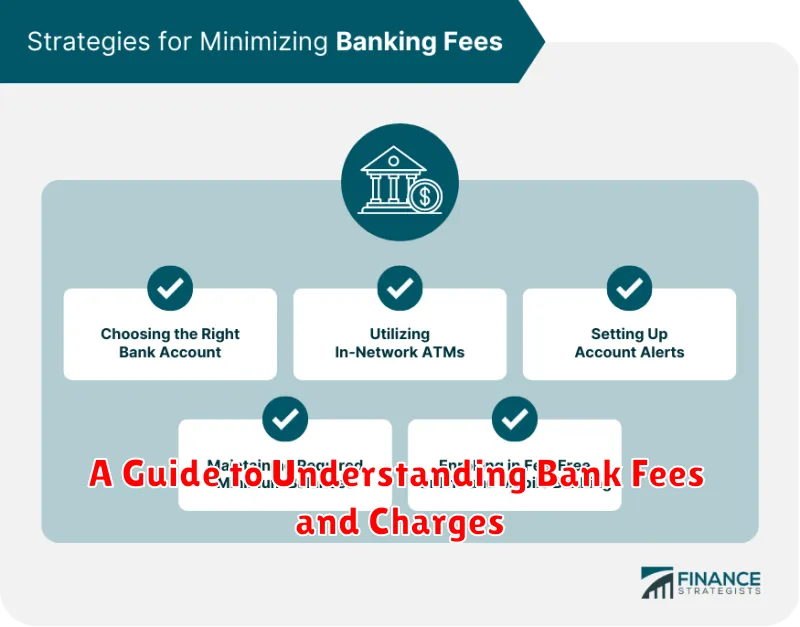
Navigating the world of bank fees and charges can be a daunting task. Understanding these often-complex costs is crucial for effective financial management. This guide will provide a comprehensive overview of common bank fees, including monthly maintenance fees, ATM fees, overdraft fees, foreign transaction fees, and more. We’ll delve into the details of each fee, explain why banks charge them, and offer practical tips for minimizing or even avoiding these charges altogether. Whether you’re a seasoned banking customer or just starting out, this guide is designed to empower you with the knowledge you need to make informed decisions about your banking relationships and keep more of your hard-earned money.
From checking accounts and savings accounts to credit cards and loans, nearly every banking product comes with its associated fees. This guide will break down the various bank fees and charges associated with each of these products. We’ll discuss how to identify hidden fees, compare fee structures across different banks, and negotiate with your bank to reduce or waive certain fees. By gaining a deeper understanding of bank fees and charges, you can take control of your finances and avoid unnecessary expenses, putting yourself on the path toward greater financial well-being. Learn how to decipher the fine print, make cost-effective choices, and ultimately, maximize the value of your banking experience.
What Are Bank Fees?
Bank fees are charges levied by banks for various services and account activities. They represent a way for banks to generate revenue and cover operational costs.
These fees can vary widely depending on the type of account, the specific bank, and the services utilized. Understanding these fees is crucial for managing your finances effectively and avoiding unexpected costs.
Types of Common Charges
Understanding common bank charges is crucial for managing your finances effectively. Monthly maintenance fees are common, often charged if your account balance falls below a minimum. Overdraft fees are incurred when you withdraw more money than available in your account.
ATM fees, especially for using out-of-network ATMs, can add up quickly. Foreign transaction fees apply to purchases made in a foreign currency. Some banks also charge inactivity fees if your account remains dormant for a certain period.
Monthly Maintenance and ATM Fees
Monthly maintenance fees are common charges for maintaining a checking or savings account. These fees can vary significantly between banks and even between different account types within the same bank. Some banks waive these fees if you meet certain requirements, such as maintaining a minimum balance or having direct deposit set up.
ATM fees are incurred when you use an ATM that doesn’t belong to your bank’s network. These fees typically consist of two parts: an out-of-network fee charged by your bank and a surcharge fee charged by the ATM owner. Choosing ATMs within your bank’s network or using your debit card for purchases can help you avoid these charges.
Overdraft and NSF Fees Explained
Overdraft and Non-Sufficient Funds (NSF) fees are two common banking charges that can occur when you attempt to make a payment exceeding your available balance. Understanding the difference between these two can help you avoid unnecessary costs.
An overdraft fee is charged when the bank authorizes and pays a transaction even though you don’t have sufficient funds. This service is typically opt-in, meaning you must agree to allow overdrafts. The bank essentially covers the transaction, creating a negative balance in your account.
An NSF fee, on the other hand, is charged when the bank rejects a transaction due to insufficient funds. This means the payment is not processed, and you are penalized for attempting a transaction you couldn’t afford.
Both fees can be substantial, so it’s crucial to monitor your account balance and manage your spending responsibly to avoid incurring these charges.
Foreign Transaction Fees
Foreign transaction fees are charges levied by banks or credit card companies for transactions made in a currency other than your account’s currency. These fees typically range from 1% to 3% of the transaction amount.
They apply to various transactions, including purchases made while traveling abroad, online purchases from international merchants, and ATM withdrawals in foreign currencies.
Be aware of these charges when making international transactions. Some cards offer no foreign transaction fees, a valuable feature for frequent international travelers.
How to Avoid Unnecessary Charges
Understanding your bank’s fee structure is the first step in avoiding unnecessary charges. Review your account terms and conditions carefully.
Overdraft fees are common and easily avoided. Monitor your account balance regularly through online banking or mobile apps. Set up low-balance alerts to notify you when your funds are low. Consider overdraft protection options such as linking a savings account.
ATM fees can accumulate quickly. Use your bank’s ATMs whenever possible. Plan your cash withdrawals in advance to minimize trips to the ATM.
Maintain a minimum balance if your account requires it to avoid monthly maintenance fees. Explore other account options if maintaining the minimum balance is consistently difficult.
Comparing Banks on Fees
Fee structures vary significantly between banking institutions. It’s crucial to compare fees before committing to a bank. Consider which services you use regularly and how these fees could impact your finances.
Some common fees to compare include monthly maintenance fees, ATM fees (both in-network and out-of-network), overdraft fees, and wire transfer fees. Don’t overlook fees for services you may use less frequently, like stop payment orders or paper statement fees.
Use online resources and bank fee schedules to make direct comparisons. This will help you choose an institution that aligns with your banking habits and minimizes your overall costs.
Negotiating or Waiving Charges
While banks have established fee structures, it’s sometimes possible to negotiate or have certain charges waived. Proactively addressing unexpected fees is key. Contact your bank immediately upon noticing a charge you believe is unwarranted. Explain the situation calmly and clearly.
Factors influencing negotiation success include your account history, relationship with the bank, and the reason for the fee. Long-standing customers with good records are often more successful. Valid reasons for requesting a waiver might include a bank error, unforeseen circumstances, or introductory offers.
Reading the Fine Print
Thoroughly reviewing the terms and conditions of your bank account is crucial. This often-overlooked step can save you from unexpected fees and charges. Banks are required to disclose their fee schedules, but they’re often buried in dense legal language.
Look for key terms such as monthly maintenance fees, overdraft fees, ATM fees (in-network and out-of-network), and transfer fees. Pay close attention to the conditions that trigger these fees, such as falling below a minimum balance, exceeding transaction limits, or using out-of-network ATMs.
Tips to Minimize Banking Costs
Minimize unnecessary fees by being mindful of your account activity. Avoid overdraft fees by tracking your balance and setting up low-balance alerts.
Consider switching to a no-fee account. Many banks offer checking and savings accounts with no monthly maintenance fees. Research different options to find an account that meets your needs.
Take advantage of online banking. Many transactions, such as transfers and bill pay, are often free online. This can help you avoid potential in-person banking charges.
